
"Mushonyi CWS"
51 article(s) found

Rwanda wash bourbon coffee hand-made data how to drink Rwanda water wash bourbon
Professional baristas exchange please follow the coffee workshop (Wechat official account cafe_style) hand-made in Rwanda. 15g powder, medium fineness grinding (small Fuji ghost tooth cutter 3.5 grinding), v60 filter cup, 90-92 degrees water temperature, first water injection 30g water, 27 seconds steaming, injection to 105g water cut off, wait for powder bed water to half, then water injection, slow water injection until 225g water, tail section
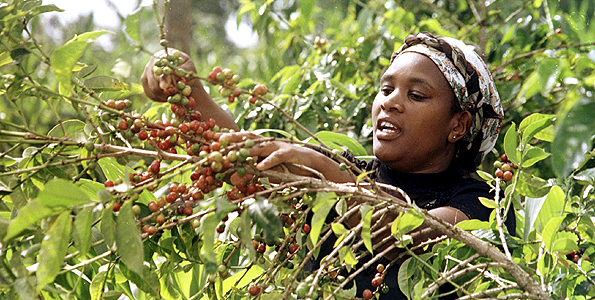
African Coffee Manor Musiui treatment Plant in the western province of Rwanda washing and treating bourbon boutique black coffee
Like many African countries, Rwandan coffee is mainly produced by small farmers, and the ripe cherry fruits are collected and sent to the processing station every year during the harvest period. During the annual harvest period, the ripe coffee berries picked by farmers are concentrated in the treatment station for treatment, first selected by hand to ensure that no immature or damaged fruit is mixed in. Then remove the peel in a cool, cold ring

Grading, price, raw beans and roasting degree of water-washed bourbon boutique coffee beans in Muxiui treatment plant, Rwanda
For professional baristas, please pay attention to the coffee workshop (Wechat official account cafe_style) factory name: coffee Qianjie Cafe location: 10 Baoqian Street, Yuexiu District, Guangzhou City, contact information: 020-38364473 ingredients table: home baking shelf life: 30 net content: 227g packaging: bulk taste: sweet coffee beans ripe degree: whether coffee beans contain sugar: sugar-free origin:

Types, brand recommendations and estates of water-washed bourbon boutique coffee beans at the Musui treatment plant in Rwanda
Professional baristas Please follow Coffee Workshop (Wechat official account cafe_style) bourbon Coffee (French: Caf Bourbon) is a kind of coffee produced by Arabica coffee bourbon cultivation. Bourbon coffee was originally grown in Reunion, which was also known as le Bourbon Island before 1789. It was later occupied by France to work with the African continent and Latin
Flavor characteristics of Rwandan coffee beans _ does Rwandan coffee taste good? how much is the price of Rwandan coffee
Professional coffee knowledge exchange more coffee bean information please follow the coffee workshop (Wechat official account cafe_style) Qianjie coffee recently got a batch of African Rwanda coffee beans, frankly, before the Rwanda (Rwanda) coffee did not have a deep impression, but through the Rwanda restaurant to know this bean, taste sour, but after drinking it, but endless aftertaste, let me infatuated
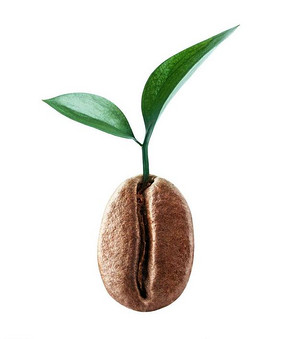
Rwanda coffee bean producing area, Rwanda coffee bean introduction
Following caf é (Wechat official account vdailycom) found that Beautiful Cafe opened a small shop of its own in Rwanda, which is divided into five major coffee producing regions. The coffee produced in these five regions is slightly different in flavor and taste. The coffee from Rwanda tastes sour, but it has a lingering aftertaste. Good coffee is like Chinese tea, it feels sweet only after drinking it. Mustafari said. Well-known coffee company

Flavor characteristics of Luhiro Coffee in Rwanda Coffee producing area. How to make Rwandan Coffee?
Professional coffee knowledge exchange more coffee bean information please follow the coffee workshop (Wechat official account cafe_style) experience: try the first cup, try it and find it seems a little dry? It's not as slippery as expected. A bit like citrus characteristics, or orange peel? After moderate temperature, the touch is closer to the juicy state, but it still feels like when you drink it.
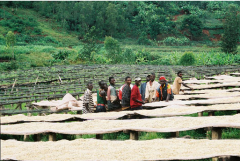
Starbucks Burundian Coffee Burundian Coffee producing area introduces where Burundian coffee beans come from?
For professional baristas, please follow the coffee workshop (official Wechat account cafe_style) Burundi is located on the south side of the equator in east-central Africa. It is bordered by Rwanda to the north, Tanzania to the east and south, Congo (Kinshasa) to the west, and Lake Tanganyika to the southwest. There are many plateaus and mountains in the territory, most of which are made up of the plateau on the east side of the East African Rift Valley. The average elevation of the whole country is 1600 meters, which is called the mountain country.
The difference between Burundi and Rwanda, Burundian Heart of Africa AA freshly roasted boutique coffee beans
For professional baristas, please follow the coffee workshop (official Wechat account cafe_style) Burundi is located on the south side of the equator in east-central Africa. It is bordered by Rwanda to the north, Tanzania to the east and south, Congo (Kinshasa) to the west, and Lake Tanganyika to the southwest. There are many plateaus and mountains in the territory, most of which are made up of the plateau on the east side of the East African Rift Valley. The average elevation of the whole country is 1600 meters, which is called the mountain country.
What are the similarities and differences in the flavor and taste of coffee between Ethiopia, Burundi and Rwanda?
For professional baristas, please follow the coffee workshop (official Wechat account cafe_style) Burundi is located on the south side of the equator in east-central Africa. It is bordered by Rwanda to the north, Tanzania to the east and south, Congo (Kinshasa) to the west, and Lake Tanganyika to the southwest. There are many plateaus and mountains in the territory, most of which are made up of the plateau on the east side of the East African Rift Valley. The average elevation of the whole country is 1600 meters, which is called the mountain country.
Brief introduction of processing methods and varieties of coffee beans in Rwanda
Following Cafe (Wechat official account vdailycom) found that Beautiful Cafe opened a small shop of its own. Rwanda is known as the country of a thousand hills. It is full of mountains and plateaus, and most of the area has a tropical plateau climate and savanna climate, which is mild and cool. There are about 33000 hectares of coffee plantations and 500000 people are engaged in the coffee industry. Rwanda is the only country in the world that can fully enjoy the land.